About Pressure Reducing Station
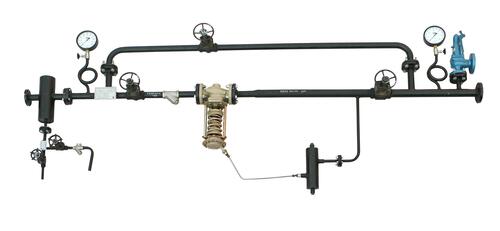
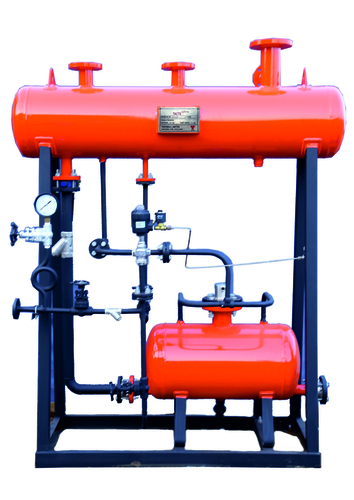
Thermax Pressure Reducing Stations are manufactured as ready to assemble units for steam management. The modular, ready to assembly pressure reducing stations have been Standardized for faster deliveries. The inlet and outlet piping and valves are selected as per the best engineering practices. These pressure-reducing stations eliminate the unnecessary hassles of field engineering and site fabrication, which decrease installation time and reduce installation cost. All PRS are hydraulic tested prior to shipment and undergo stringent quality checks to meet IBR requirements.
Advanced Pressure Control for Diverse ApplicationsEngineered for demanding environments, this Pressure Reducing Station ensures precise pressure management across a wide range of industrial settings. Its pilot-operated or spring-loaded valves, along with customizable dimensions and material choices, address the specific needs of steam, gas, and fluid systems. The integrated safety and control features make it an ideal solution for process reliability and operational efficiency.
Customization and Integration to Suit Your ProcessEach station is fully customizable, from inlet/outlet pressures to flow capacities and end connections. Optional accessories such as silencers, desuperheaters, strainers, and thermometers are available, ensuring integration with your existing systems. The corrosion-resistant finish and skid-mounted or inline installation deliver flexibility and long-lasting performance.
FAQ's of Pressure Reducing Station:
Q: How does a Pressure Reducing Station work to regulate system pressure?
A: A Pressure Reducing Station utilizes pilot-operated or spring-loaded regulating valves to automatically reduce incoming pressure to a desired outlet range (0.5-20 bar), ensuring downstream equipment operates safely and efficiently within specified parameters.
Q: What industries typically use this Pressure Reducing Station?
A: These stations are widely used across process industries, steam/gas distribution systems, power plants, refineries, and boiler applications, due to their high adaptability, safety features, and reliable control.
Q: When should I select a pilot-operated valve over a spring-loaded type?
A: A pilot-operated valve is preferable for systems requiring highly accurate pressure control under varying flow conditions, while spring-loaded valves are suitable for more general applications with steady flow and pressure requirements.
Q: Where can this station be installed, and what mounting options are available?
A: The Pressure Reducing Station can be skid-mounted for easier transportation and installation or installed inline as part of your process piping, tailored to site requirements and space constraints.
Q: What is the process for customizing a Pressure Reducing Station for my facility?
A: Customization begins with identifying operating pressures, flow needs, connection types, materials, and any required accessories. The station is then engineered and manufactured to suit your specific site conditions and process requirements.
Q: How does the integrated safety system benefit my operation?
A: Safety is enhanced with pressure relief valves, pressure gauges, safety locking arrangements, and optional accessories. These components protect against overpressure, ensure accurate monitoring, and facilitate secure operation during maintenance and emergencies.
Q: What are the benefits of choosing corrosion-resistant surface finishes and high-grade materials?
A: Corrosion-resistant paints and materials like stainless steel or MS prolong equipment life, reduce maintenance frequency, and safeguard the integrity of the station in harsh industrial environments.
 Send Inquiry



 Send Inquiry

 Send Inquiry
 English
 Spanish
 French
 German
 Italian
 Chinese (Simplified)
 Japanese
 Korean
 Arabic
 Portuguese